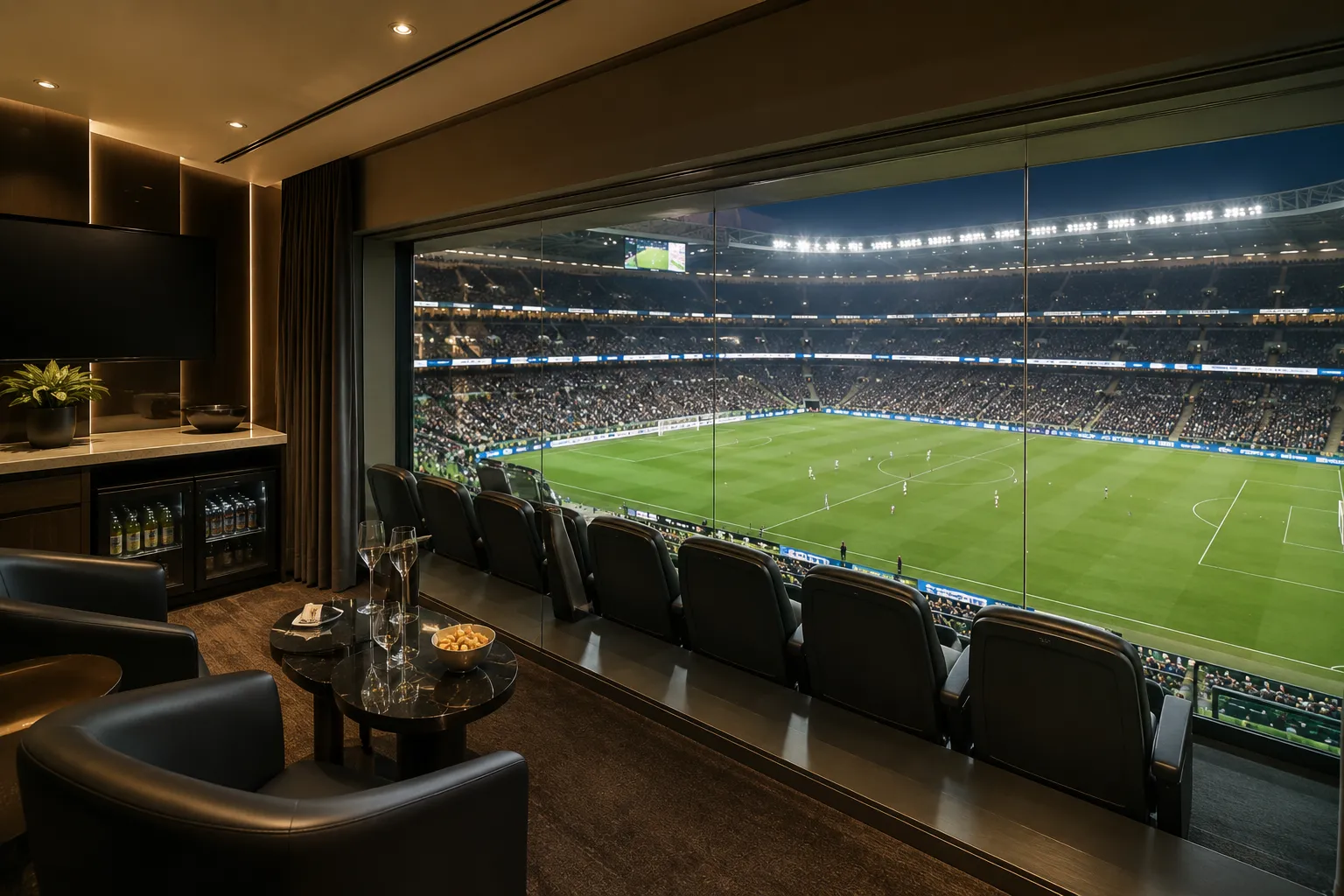
For many supporters, World Cup hospitality is often reduced to a simple idea: a more expensive ticket.
In reality, hospitality is not simply a premium seat. It is a different way of attending the tournament.
While a standard ticket is designed to provide access to the match itself, hospitality packages are built around the wider experience of the day. Depending on the package selected, this can include premium seating, dedicated lounges, food and beverage service, private entrances and additional guest services before, during and after the match.
Understanding that distinction is important because hospitality is often judged solely on price, when the real difference lies in how the event is experienced.
What World Cup Hospitality Actually Includes
What World Cup Hospitality Actually Includes
Although individual packages vary, official World Cup hospitality generally combines three elements.
The first is location. Hospitality seats are typically positioned in premium areas of the stadium, offering better sightlines and a more comfortable matchday environment.
The second is hospitality itself. Most packages include access to exclusive lounges or hospitality spaces where guests can arrive before kick-off, enjoy food and beverages, and remain after the final whistle. Depending on the category, the experience can range from a shared hospitality environment to a fully private suite.
The third is convenience. Dedicated entrances, guest services and simplified logistics are often overlooked when comparing packages, yet they form a significant part of the overall experience, particularly during major knockout matches where stadiums operate at maximum capacity.
The Different Hospitality Categories
The Different Hospitality Categories
Official hospitality for FIFA World Cup 2026 currently includes:
FIFA Pavilion
Champions Club
Trophy Lounge
Pitchside Lounge
Private Suites
FIFA Pavilion
The most accessible entry point into the hospitality programme. FIFA Pavilion combines premium seating with a shared hospitality environment, making it a popular option for supporters who want an upgraded experience without moving into the highest hospitality tiers.
Champions Club
Champions Club places greater emphasis on the pre-match and post-match experience. It is designed for guests who view the match as part of a broader day rather than the sole focus of it.
Trophy Lounge
Positioned above Champions Club, Trophy Lounge offers a more exclusive setting, enhanced hospitality services and a more limited guest environment.
Pitchside Lounge
The most distinctive hospitality product available for many matches. Pitchside Lounge combines premium hospitality with seating located exceptionally close to the action, creating one of the most immersive experiences available at the tournament.
Private Suites
Designed primarily for corporate groups, private suites offer a fully private hospitality environment with dedicated service and greater control over the guest experience.
What Hospitality Does Not Include
What Hospitality Does Not Include
One of the most common misconceptions is that hospitality automatically includes travel, accommodation or complete trip planning.
In most cases, hospitality packages focus on the matchday experience itself. Flights, hotels and local transportation are typically separate arrangements unless specifically included within a broader travel package.
For that reason, supporters should evaluate hospitality based on what it is intended to provide: enhanced access and an elevated stadium experience.
Why People Choose Hospitality
Why People Choose Hospitality
The decision to purchase hospitality is rarely about luxury alone. For some attendees, it is about comfort. For others, it is about entertaining clients, hosting guests or reducing the uncertainty that often surrounds high-demand events. Perhaps the most important factor is access.
As demand increases, hospitality frequently remains available long after public inventory becomes limited. This does not make it the right choice for everyone, but it explains why many supporters begin considering hospitality only after discovering how competitive the public market can become.
Is Hospitality Worth It?
Is Hospitality Worth It?
There is no universal answer. For supporters whose priority is simply attending a match, a standard ticket may provide everything they need. For others, hospitality offers something different: additional comfort, simplified logistics, premium surroundings and, in some cases, access to matches that may be difficult to secure through public sales alone.
The question is not whether hospitality is better. The question is whether it is better suited to the experience you want.
Hallpeer Perspective
Hospitality is often described as a premium ticket. In practice, it functions as a separate access channel with its own inventory, allocations and opportunities.
The most useful way to evaluate hospitality is not by comparing it to a standard ticket, but by understanding what problem it solves. For some supporters that problem is comfort. For others it is convenience. For many of the tournament's most sought-after matches, it is access.